Monthly: September 2025

September once again brought weak U.S. labor market data, though investors initially viewed this as a positive sign: the Federal Reserve would likely continue with accommodative policy. Equities and crypto rallied briefly, until the latter corrected by more than 10% following the rate cut, driven in part by liquidations. Still, there are few signs that the market has reached a definitive top, allowing crypto investors to enter the final quarter with confidence.
History does not always repeat itself
Historically, September is the weakest of the twelve months, with an average bitcoin return of -3.2% since 2010. Yet markets paid little attention to that pattern this year. Bitcoin gained 5.3%, lifting the broader crypto market by about 3%.
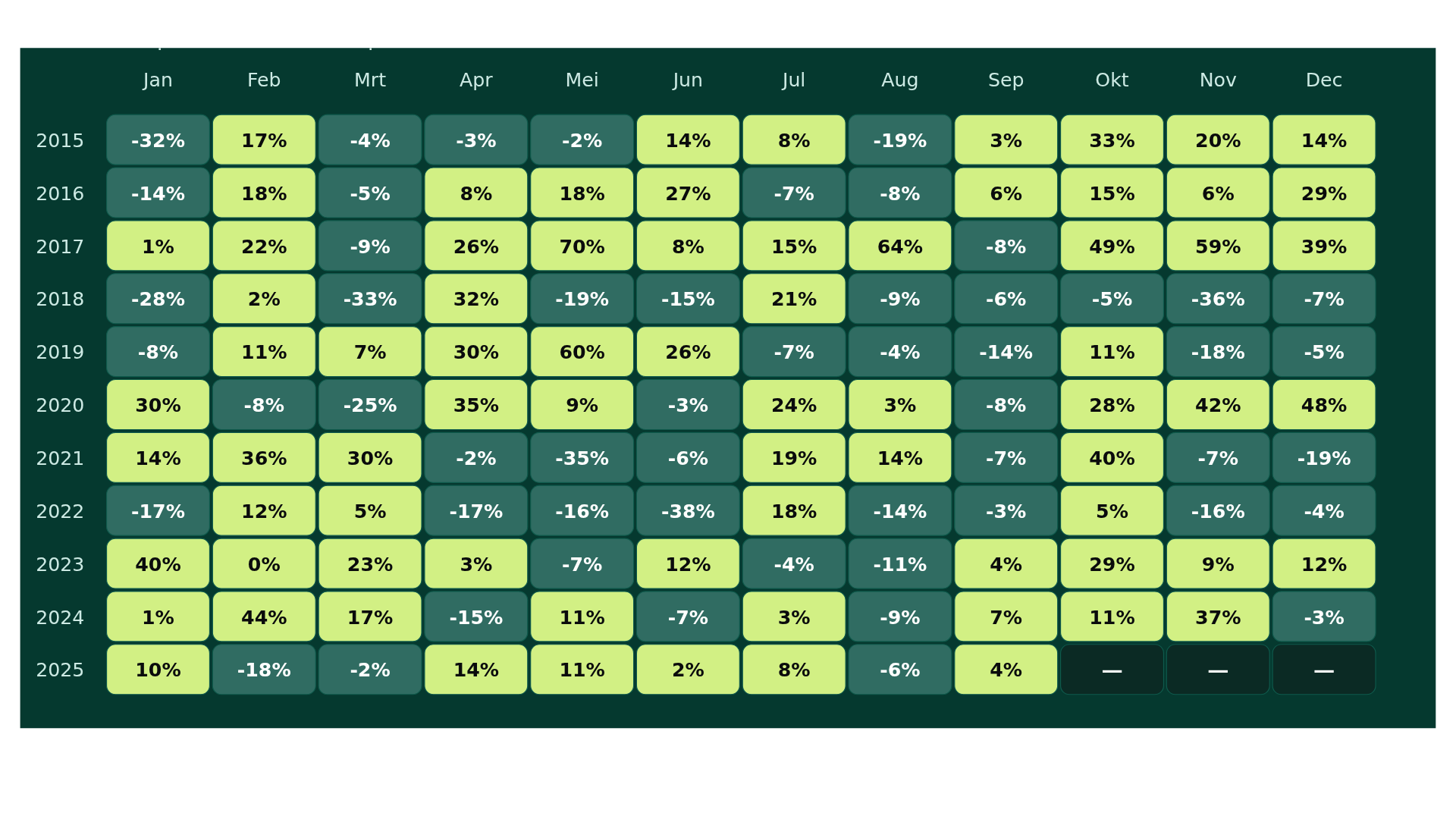
It seems we do not always need to fear the supposed seasonality of crypto markets. And with the final quarter ahead, it is worth noting that Q4, with an average return of 25.8%, has historically been by far the strongest. Will we see another powerful year-end rally, or is the so-called “crypto summer” in autumn finally over?
Working under pressure
September picked up where August left off. U.S. labor market reports once again revealed grim numbers, showing that 911,000 fewer jobs were added to the economy over the past year than initially expected. This marked the largest revision on record.
On top of these hard numbers, the softer data also painted a bleak picture. The Purchasing Managers’ Index (PMI), a survey of corporate managers that tracks business activity, still pointed to a shrinking industrial workforce. This only covers part of the U.S. labor market, but it is often the first group to be hit. Both present conditions and forward-looking signals look far from encouraging.
A macroeconomic cocktail
Still, bad news was once again interpreted as good news last month. In August, the Federal Reserve (FED) had already acknowledged the weakness in the labor market, so the negative surprise was small, if not negligible.
On the contrary, in the first two weeks of September, equity markets gained a few percent, and crypto benefitted as well. The combination of a deteriorating labor market and the absence of rising inflation makes accommodative Fed policy seem inevitable, an outlook investors have welcomed.
Cause and effect
Despite the positive sentiment around the expected rate path, the party ended by mid-September. On September 18, the day after the Fed’s long-anticipated rate cut, the crypto market hit a local top. From there, the second half of the month turned red. Across the board, crypto lost more than 10%, with September 22 marking one of the largest liquidation waves of the year.
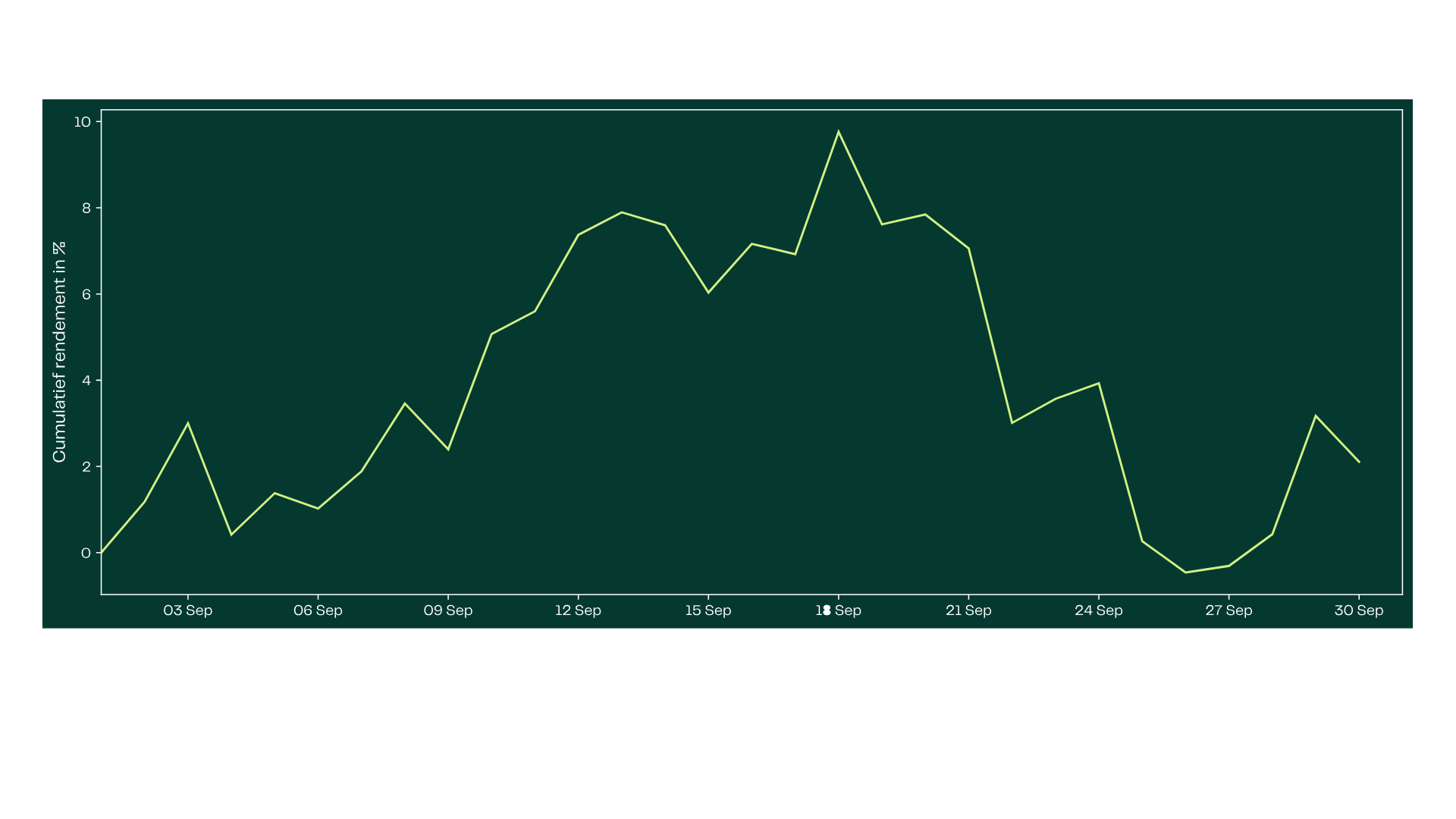
As is often the case, observers scrambled for an explanation after the fact. These are typically post-hoc analyses, yet still valuable because they highlight perceived causes that can contain useful information. And more often than not, the word “perceived” matters more here than the word “cause.”
This time, attention turned to the wave of liquidations: leveraged derivative positions closed out for lack of collateral. The implication was that too many investors were betting heavily on higher prices, pointing to an “overheated market.”
What is often overlooked, however, is that most centralized exchanges do not fully report liquidation data, given the technical complexity involved. At present, Bybit is the only major exchange to publish all of its liquidation data. Yet Bybit represents less than a quarter of the total market. On that basis alone, it is difficult to draw hard conclusions about the market’s overall state.
No euphoria, but a pattern
In our view, the market as a whole still shows little sign of overheating. The clearest evidence is the relatively low funding rate. This metric, from the same derivatives market as liquidations, reflects the extent to which traders are speculating on rising or falling prices. Historically, moments of euphoria, market tops and overheating have been marked by annualized funding rates in the tens or even hundreds of percent. Today, bitcoin’s rate sits only at a few percent, and for many altcoins it is even lower.
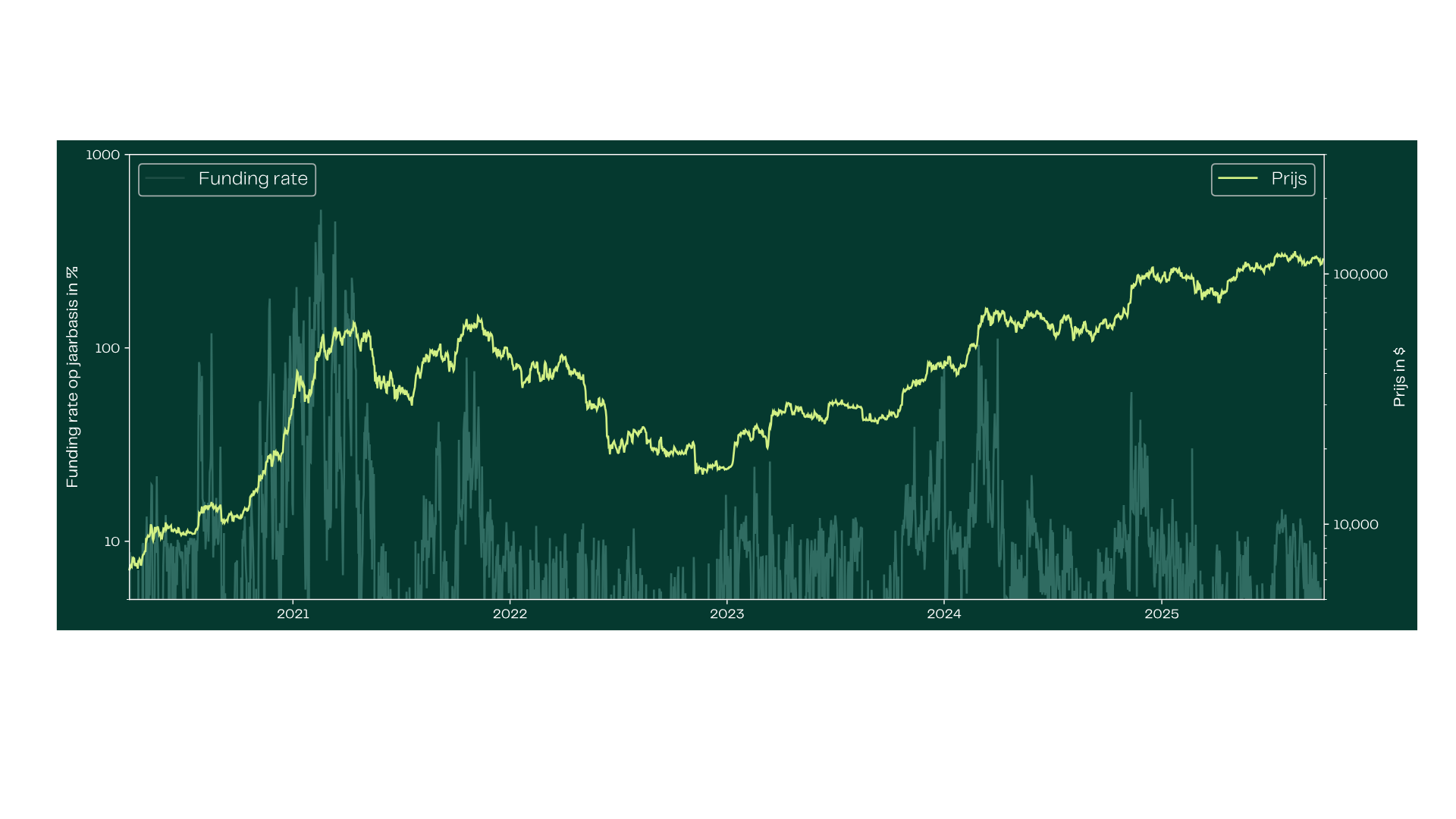
So if there is no overheating, why did the market turn lower after the rate cut? In our view, it was nothing more than a case of “buy the rumor, sell the news.” Prices fell simply because the main driver of earlier gains had already played out. With the next Fed decision scheduled for October 29, the same pattern could repeat, unless other developments take over to support positive sentiment.
What we will be watching in October
In the coming month, we will be watching closely for answers to the following:
- Will expectations of rate cuts help revive the U.S. labor market?
- Are we really seeing signs of overheating, or is there still room to run?
- Will the focus in October shift beyond macroeconomics?
Related articles
View all updates
Reports
House View 2026
Discover what Amdax's asset management team expects to be the key themes of 2026.


Reports
Monthly: October 2025
While early in the month people were still cheerfully pointing to the supposed correlation between precious metals and bitcoin, a sharp price drop hit many crypto investors like a cold shower. Bitcoin turned out not to be a safe haven after all, but subject, among other things, to the turmoil around the U.S. government and global unrest caused by Chinese export restrictions. The sour mood, however, seemed largely confined to the group of investors who may have been a bit too optimistic.

Reports
Monthly: August 2025
At the macroeconomic summit in the US at the end of August, financial markets held their breath. At the annual Jackson Hole Economic Symposium, the focus was primarily on disappointing labor market figures rather than inflation. That fueled hopes of rate cuts. Meanwhile, both bitcoin and ether broke price records, but the real frenzy is still absent.
Stay on top of the market and subscribe
Receive Amdax Weekly in your mailbox every Wednesday.
