Volatility is dominating the market

Crypto is under pressure and sentiment is subdued, but based on the broader market picture we see no convincing signs that we are at the start of a bear market.
Every week, Amdax summarizes what’s happening in the crypto market for you. Want to dive deeper? Click on the links in this email for more insights.
This newsletter is a co-production with our partner, Bitcoin Alpha.
Market update
Stay informed in three steps:
1. A week full of volatility
The past week had two distinct phases. The market initially showed signs of a cautious recovery, until Bitcoin suddenly dropped toward $84,000 on December 1. That shock, however, was quickly absorbed: buyers stepped back in immediately, and the price steadily recovered to around $93,000. The message of the week is therefore less about ‘weakness’ and more about one thing: significantly higher volatility.
2. Traditional markets remain strong and support the broader picture
While crypto swung back and forth, equity markets remained remarkably stable. U.S. technology stocks in particular continue to trade near record highs. This shows that risk markets as a whole are not under pressure and that the recent turbulence is largely crypto-specific. For us, that is an important anchor: outside the crypto market, risk appetite remains intact.
3. Altcoins fall behind
Altcoins underperformed bitcoin last week. This is visible in a rising bitcoin dominance: within the crypto market, capital is temporarily flowing back to the largest and most liquid asset. That aligns with a period of uncertainty, but it differs from what we observed in the weeks before. The question now is whether this marks the end of the phase in which bitcoin was leading the market downward.
News overview
The key headlines from this week:
- Klarna is testing its own stablecoin on Stripe’s Tempo blockchain network.
The BNPL giant launched KlarnaUSD on Tempo’s testnet with the aim of making dollar payments faster and cheaper in the long term. The company views its stablecoin primarily as new infrastructure for cross-border transactions, not as a consumer product. If the pilots succeed, KlarnaUSD is expected to go live in 2026. Klarna serves 114 million customers, accounting for $118 billion in payment volume.
- Green light for Polymarket’s return to the U.S. market.
The on-chain prediction market received approval from the CFTC this week after acquiring the regulated trading platform QCX earlier this summer. This allows Polymarket to once again legally serve U.S. users. Analysts see the move as a breakthrough: for the first time in years, the regulator is choosing to permit prediction markets rather than restrict them.
- Sony Bank is developing its own U.S. dollar stablecoin for gaming and entertainment.
According to Nikkei, the bank intends to use its own digital dollar starting in 2026 for payments across Sony’s ecosystems: from PlayStation to anime platforms. In October, Sony applied for a U.S. banking license through its newly established subsidiary, Connectia Trust.
- Strategy will sell bitcoin only as a last resort, says CEO Phong Le.
A sale could occur if the mNAV, the market value of the share relative to the bitcoin value on the balance sheet, falls below 1 and the company is unable to raise additional capital. In that scenario, selling bitcoin is “mathematically justified,” Le said, to protect what he calls “bitcoin yield per share.” He emphasised that there are currently no concrete plans to sell.
- China reaffirms strict ban on crypto and stablecoins.
In a meeting on 28 November, the central bank reiterated that digital assets are not legal tender and that trading and usage remain illegal. According to Beijing, stablecoins introduce additional risks related to KYC and capital flight. The message remains uncompromising: risk containment comes first, and the ban on crypto remains firmly in place.
Amdax's take
Crypto is under pressure and sentiment is subdued, but based on the broader market picture we see no convincing signs that we are at the start of a bear market. Traditional markets remain resilient, and the latest macro data is more supportive of risk assets than a cause for concern. We therefore interpret last week’s move as a sharp correction within the ongoing bull market. The broader outlook remains positive for now.
BTC/ETH Balancer
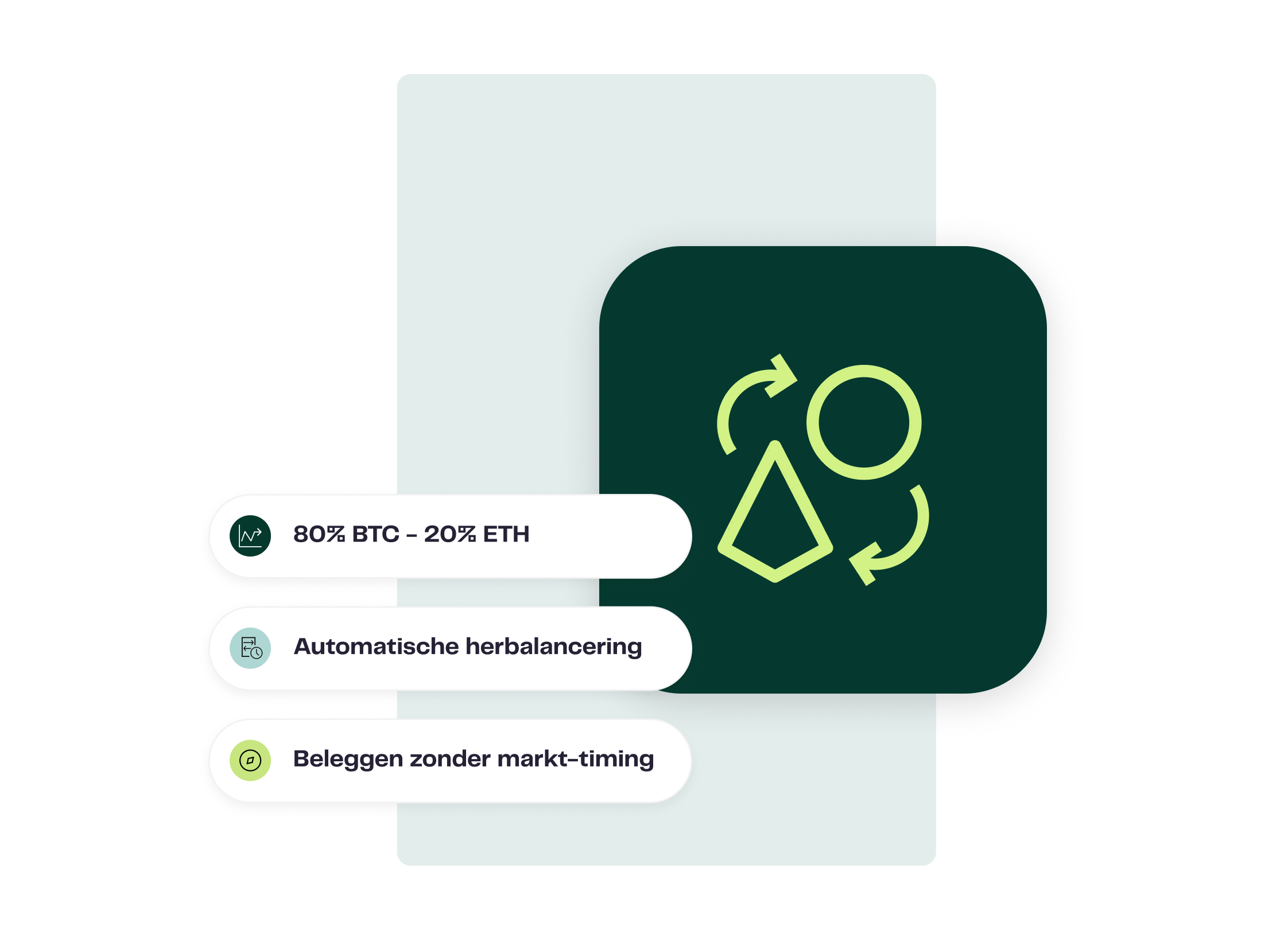
Since this week, we have introduced a new product within our asset management offering. The BTC/ETH Balancer is a passive investment strategy that automatically allocates your portfolio to a fixed distribution of 80% bitcoin and 20% ether. Through monthly rebalancing, your portfolio remains aligned with this target allocation, without the need to monitor markets or execute transactions manually.
This approach allows you to benefit from the strength of the two largest crypto assets, while maintaining a controlled risk-return profile. The strategy is available starting from a minimum investment of €10,000.
Related articles
View all updates
Bitcoin fell along with tech stocks last week and hit its lowest level since August on Sunday. When stocks bounced back on Monday, bitcoin stayed put. In Washington, prediction markets and crypto companies linked to the Trump family are coming under fire. And on Thursday, the Dutch House of Representatives votes on box 3, the Dutch tax on wealth and investments, where crypto remains an exception.


6.3 billion dollars disappeared from Binance last week, the largest crypto theft on record. Bitcoin slid along with tech stocks to its lowest level since mid-September. The same day, the owner of the NYSE chose Hyperliquid’s technology for a new market. And the Dutch Council of State wants the new Box 3 tax postponed until 2030.


Bitcoin slipped back to 80,000 dollars with tech stocks over the past week, while gold fell below 4,000 dollars. The Fed decides on rates today. In the US, the first final stablecoin rules are in place, and DNB has mapped Dutch household crypto holdings for the first time.
Stay on top of the market and subscribe
Receive Amdax Weekly in your mailbox every Wednesday.
